Porsche Finally Conquers Petit Le Mans in a Race Defined by Chaos
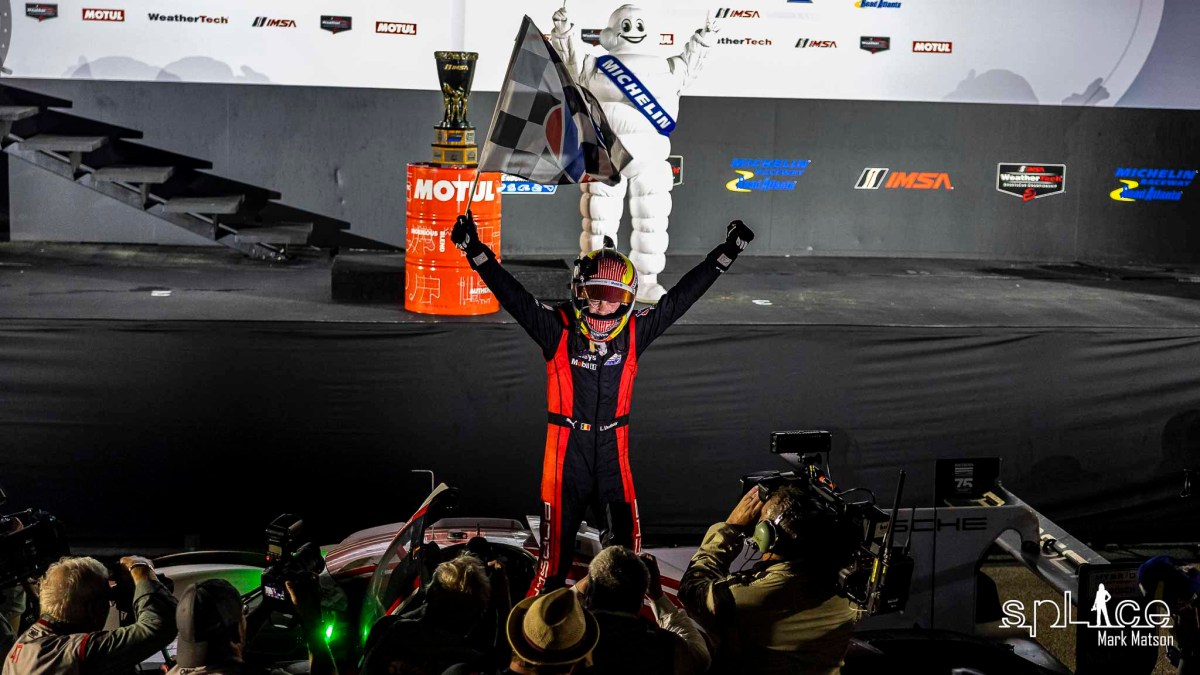
Vanthoor, Estre and Campbell deliver Porsche Penske Motorsport its first overall Petit Le Mans victory as weather, cautions and late-race drama turn Road Atlanta into a ten-hour test of survival
Braselton, GA (October 3rd, 2026)
There are races that are won on outright speed, races decided by strategy and races that simply become exercises in survival. The 2026 Motul Petit Le Mans managed to be all three.
For ten hours at Michelin Raceway Road Atlanta, the final round of the IMSA WeatherTech SportsCar Championship repeatedly changed shape. Rain arrived before the start and returned with enough force to alter tire strategies. The field was interrupted by a record 16 full-course cautions. Lightning in the area forced a 27-minute stoppage. Cars that appeared destined for victory disappeared from contention, championship hopes changed hands and, with less than two hours remaining, one of the fastest cars in the field was launched into a violent accident.
When the checkered flag finally fell, it was Laurens Vanthoor who emerged from the chaos.
Vanthoor, Kévin Estre and Matt Campbell drove the No. 6 Porsche Penske Motorsport Porsche 963 to a 1.205-second victory over Sheldon van der Linde, Dries Vanthoor and Robin Frijns in the No. 24 BMW M Team WRT BMW M Hybrid V8. Jordan Taylor, Louis Deletraz and Colton Herta completed the overall podium in the No. 40 Wayne Taylor Racing Cadillac V-Series.R.
It was a victory that had been a long time coming for Porsche.
Porsche had won Petit Le Mans before, but its most recent overall victory had come in 2015 with a GT Le Mans specification 911 RSR during a rain-soaked edition of the event. This time, the manufacturer finally conquered the race with its premier prototype. The result also completed a remarkable endurance-racing sweep for Porsche Penske Motorsport, which won the major IMSA enduros at Daytona, Sebring and Road Atlanta during the same season.
For Estre, it was his first IMSA WeatherTech victory. For Campbell, it was a particularly significant way to close his time with Porsche. For Vanthoor, it was the culmination of a drive that demanded speed when the opportunity appeared and restraint when the race became a matter of fuel, traffic and survival.
Road Atlanta provided plenty of opportunities to make mistakes.
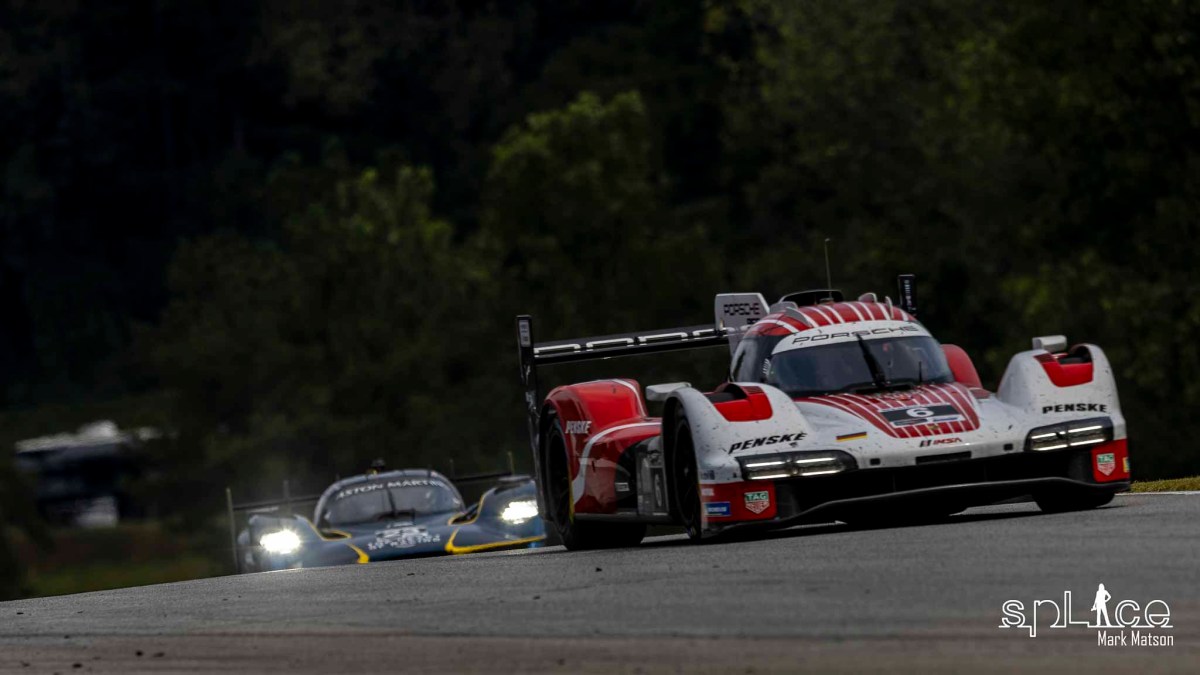
The race began beneath uncertain skies, with rain having fallen earlier in the day and the track still presenting a difficult compromise for the drivers. The GTP field started on wet-weather tires, but the circuit dried quickly enough that teams were soon faced with the first of many strategic decisions.
The No. 6 Porsche was not starting from an ideal position. The car had already lost grid positions following an incident in practice and began the race outside the front of the GTP pack. Yet Vanthoor immediately began working his way forward.
The opening phase was relatively orderly by Petit Le Mans standards. That would not last.
As the track dried, teams moved toward slick tires and began settling into the rhythm of a traditional endurance race. The Porsche crew executed its early stops well, allowing the No. 6 to gain track position. Vanthoor then made a move on the No. 31 Whelen Cadillac, putting the Porsche into the fight at the sharp end of the field.
The first cautions, however, began to erode any advantage created by pace.
The No. 6 Porsche also received an early drive-through penalty for contact with a GTD PRO car, putting an additional obstacle between the team and its first overall Petit Le Mans victory. The penalty was hardly the last piece of adversity the eventual winners would face.
The sister No. 7 Porsche, meanwhile, was making its own presence felt.
Felipe Nasr, Julien Andlauer and Laurin Heinrich had entered the weekend with the opportunity to accomplish something extraordinary. Their Porsche had already won the Rolex 24 at Daytona and the Twelve Hours of Sebring. A Petit Le Mans victory would have completed a clean sweep of IMSA’s three premier endurance races.
For much of the race, that possibility remained alive.
The two factory Porsches were frequently near the front as the changing weather and repeated cautions reshuffled the field. Andlauer was particularly effective during one of the early rain periods, making significant progress while others struggled with the changing conditions.
Then Road Atlanta became a completely different race.
Rain returned heavily during the fourth hour. Cars scrambled for wet-weather tires as the circuit deteriorated, and the field was neutralized once again. Just as racing resumed, another wave of weather moved through the area.
Lightning was detected near the circuit, forcing officials to bring the race to a halt.
For 27 minutes, the engines fell silent.
The stoppage was another reminder that Petit Le Mans is never simply about the ten hours shown on the schedule. At Road Atlanta, teams must be prepared for almost anything. Tire selection, fuel mileage, traffic management and driver changes are important, but so is the ability to react when nature changes the race.
When the race finally resumed, the complexion of the event had changed again.
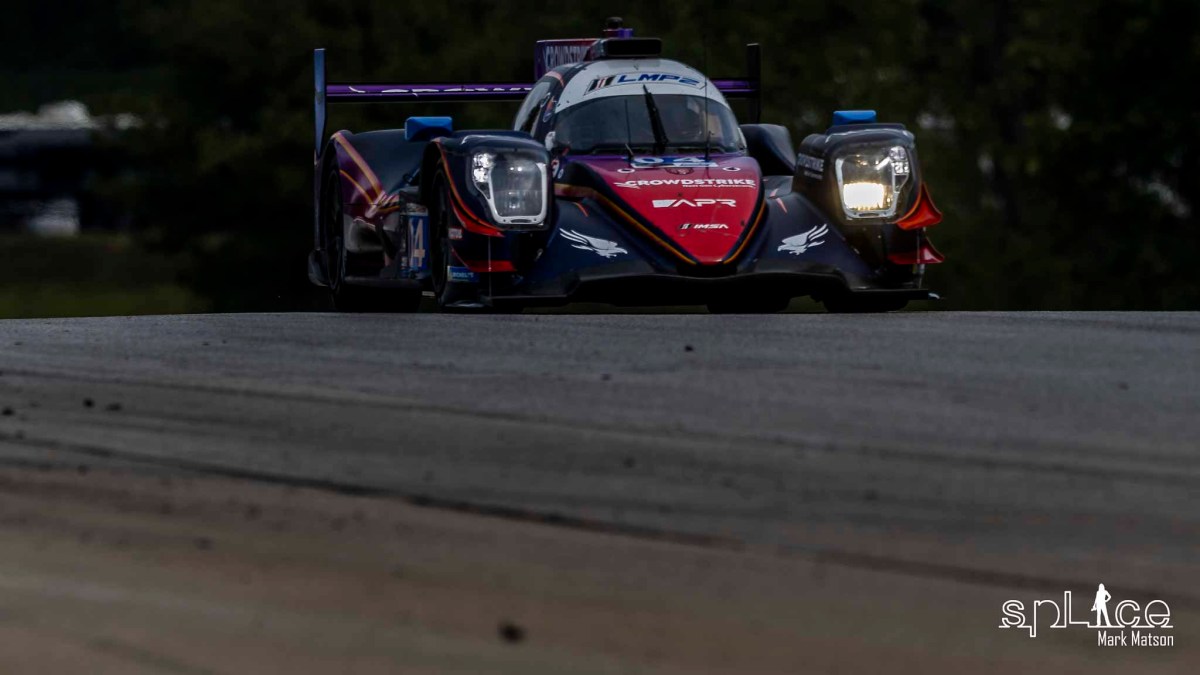
Some teams had gambled correctly on tires. Others had not. The LMP2 field produced one of the clearest examples of how quickly fortunes could turn.
The No. 04 CrowdStrike Racing by APR ORECA LMP2 07, shared by George Kurtz, Alex Quinn and Toby Sowery, had already been knocked backward by an early drive-through penalty for incident responsibility. The penalty put the car a lap down and appeared to make the team’s championship ambitions considerably more difficult.
Instead, the team began a remarkable recovery.
Sowery found pace during a wet portion of the race while remaining on slick tires, a decision that initially looked extremely risky. As the circuit evolved, however, the gamble paid dividends. CrowdStrike by APR clawed back the lost ground and eventually returned to the front of the LMP2 fight.
Its primary championship rival, the No. 43 Inter Europol Competition ORECA shared by Tom Dillmann, Jeremy Clarke and Bijoy Garg, refused to give up.
The two cars remained locked together through the second half of the race. Contact between them forced CrowdStrike by APR to make a rear-clip change, creating another setback for the championship leader.
Yet the No. 04 continued to recover.
By the time the final laps arrived, Quinn was in control of the LMP2 class. Dillmann was pushing hard behind him, but the No. 04 held on to win by only 0.666 seconds.
CrowdStrike Racing by APR therefore left Road Atlanta with both the race victory and the LMP2 championship. Kurtz and Quinn also secured the title, with Kurtz adding another Jim Trueman Award to his resume.
The LMP2 podium was completed by the No. 18 Era Motorsport ORECA, driven by Naveen Rao, Ferdinand Habsburg and Jacob Abel.
While the LMP2 fight was unfolding, the GTP battle was becoming increasingly unpredictable.
Cadillac entered Petit Le Mans with championships already within reach. Jack Aitken had secured the GTP driver’s title simply by taking the green flag, while Cadillac had already put itself in position to secure the manufacturer and team championships.
That did not mean the race itself was any less important.
The No. 31 Whelen Cadillac, driven by Aitken, Earl Bamber and Frederik Vesti, remained one of the major contenders for the overall victory. The No. 10 Wayne Taylor Racing Cadillac of Ricky Taylor, Filipe Albuquerque and Will Stevens was also in the mix, while the No. 40 WTR Cadillac remained close enough to capitalize if the race turned in its favor.
The BMW M Team WRT No. 24 was another constant threat.
Sheldon van der Linde, Dries Vanthoor and Robin Frijns kept the BMW in contention through the weather interruptions and the repeated caution periods. Unlike a conventional sprint race, there was no guarantee that the fastest car at any particular moment would still be in front an hour later.
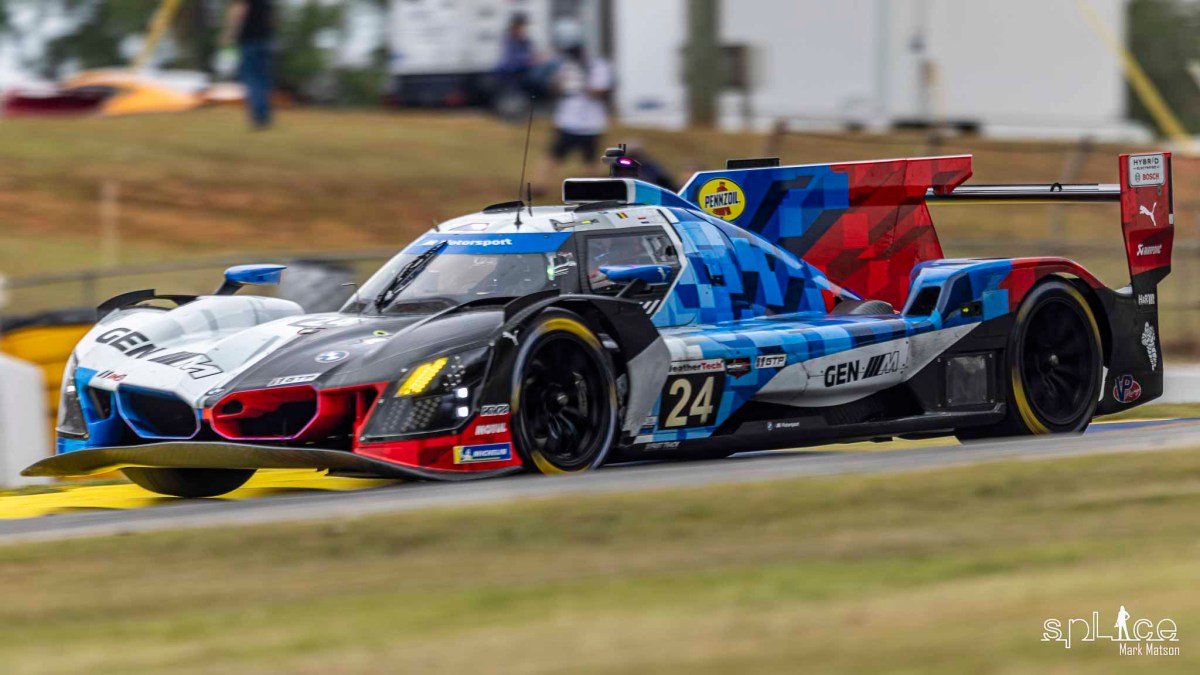
That was especially true as darkness settled over Road Atlanta.
The track had become a chessboard of headlights, brake lights and rapidly changing gaps. Every restart created another opportunity. Every caution reset the field. Every pit stop had the potential to transform the order.
The No. 6 Porsche steadily moved back into the fight.
Estre and Campbell did the hard work of keeping the car positioned for the closing stages. By the time Vanthoor returned to the cockpit for the final portion of the race, the Porsche was no longer simply chasing the leaders. It had become one of the cars capable of winning.
Then, with approximately 90 minutes remaining, the race took another dramatic turn.
Nasr was following Vanthoor’s No. 6 Porsche through traffic when the No. 7 came upon slower GT traffic. Vanthoor had moved back toward the racing line after negotiating traffic, leaving Nasr with little room to react.
The resulting contact sent the No. 7 Porsche into a heavy accident along the front stretch.
The Porsche was thrown violently toward the barrier and briefly became airborne. The sight was enough to silence the paddock.
Fortunately, Nasr was able to climb from the wrecked Porsche under his own power.
The crash ended what had been an extraordinary attempt by Nasr, Andlauer and Heinrich to sweep Daytona, Sebring and Petit Le Mans. It also left Porsche Penske Motorsport with only one car capable of fighting for the overall victory.
From that point forward, the No. 6 became the team’s entire race.
Vanthoor restarted near the front and immediately began working through traffic. He moved into second before another caution interrupted the race.
With just over an hour remaining, Vanthoor made one of the most important moves of the night.
Exiting the final corner, he attacked for the lead and completed the pass. Suddenly, the Porsche was exactly where it needed to be.
But there was still nearly an hour of Petit Le Mans remaining.
The final pit sequence produced another tense moment. Vanthoor briefly lost the lead as he worked to bring the tires up to temperature after his final stop. The BMW and Cadillac remained close enough to punish even the smallest mistake.
Vanthoor responded by taking the lead back.
The No. 24 BMW was now the primary threat.
Behind the leaders, the No. 31 Cadillac was still in the fight, but its challenge ended late in the race when Bamber became involved in contact with the No. 23 Aston Martin Valkyrie. The Cadillac was sent toward the Turn 1 barriers and its race-winning hopes disappeared.
That left Vanthoor and van der Linde as the central characters of the final act.
The last caution period produced one final restart and one final opportunity for the BMW to attack.
Vanthoor did not panic.
With only minutes remaining, he managed traffic while protecting the Porsche’s fuel supply and maintaining enough pace to keep the BMW behind. Van der Linde pushed the BMW hard through the final laps, closing the gap wherever traffic allowed.
But the Porsche had just enough.
After ten hours and 368 laps, Vanthoor crossed the line 1.205 seconds ahead of van der Linde.
The No. 40 Wayne Taylor Racing Cadillac moved into third, with Jordan Taylor, Louis Deletraz and Colton Herta securing the final overall podium position. The No. 10 WTR Cadillac finished fourth, followed by the No. 23 Aston Martin Valkyrie of Ross Gunn, Roman De Angelis and Alex Riberas.

It was a remarkable finish for BMW M Team WRT, which had pushed the Porsche all the way to the flag. For Cadillac, the result was less satisfying on the surface, but the manufacturer still left Road Atlanta with the GTP manufacturer, team and driver championships.
The GT classes provided their own collection of stories.
In GTD PRO, the championship fight had entered the weekend with virtually everything still possible. Paul Miller Racing’s No. 1 BMW M4 GT3 EVO had been fighting its way back into championship contention after losing ground at Indianapolis, and Neil Verhagen had earned pole position at Road Atlanta to give the team an important advantage.
The GTD PRO race, however, became a battle of survival.
Thirteen of the 14 GTD PRO starters led at least one lap during the race. At various points, six cars remained mathematically alive for the championship.
That was how unpredictable the class became.
The No. 68 Car Blanche Aston Martin Vantage GT3 Evo entered the weekend without the history of the established IMSA GTD PRO programs. Yet Valentin Hasse Clot, Marco Sorensen and Mattia Drudi produced the drive of the weekend.
They did not need to dominate the race.
They simply needed to remain in position.
That approach paid off.
The white Aston Martin stayed close while the championship contenders fought through the traffic, cautions and changing weather. Drudi eventually moved the No. 68 into the lead during the final hour.
From there, Car Blanche refused to give it back.
The victory was the team’s first IMSA WeatherTech Championship class win and came in its first IMSA Michelin Endurance Cup start in GTD PRO.
The No. 77 AO Racing Porsche 911 GT3 R, driven by Nick Tandy, Harry King and Alessio Picariello, finished second.
The No. 1 Paul Miller Racing BMW finished third, with Dan Harper joining full-season drivers Neil Verhagen and Connor De Phillippi for the endurance classic.
For Paul Miller Racing, third place was worth far more than a podium trophy.
It was enough to secure the GTD PRO driver’s and team’s championships.
The title battle had come down to the final stages, with Paul Miller Racing needing to stay ahead of the No. 9 Pfaff Motorsports Lamborghini. At the finish, the BMW held the Lamborghini by only 0.266 seconds in the championship battle.
After a season defined by consistency, Paul Miller Racing had its championship.
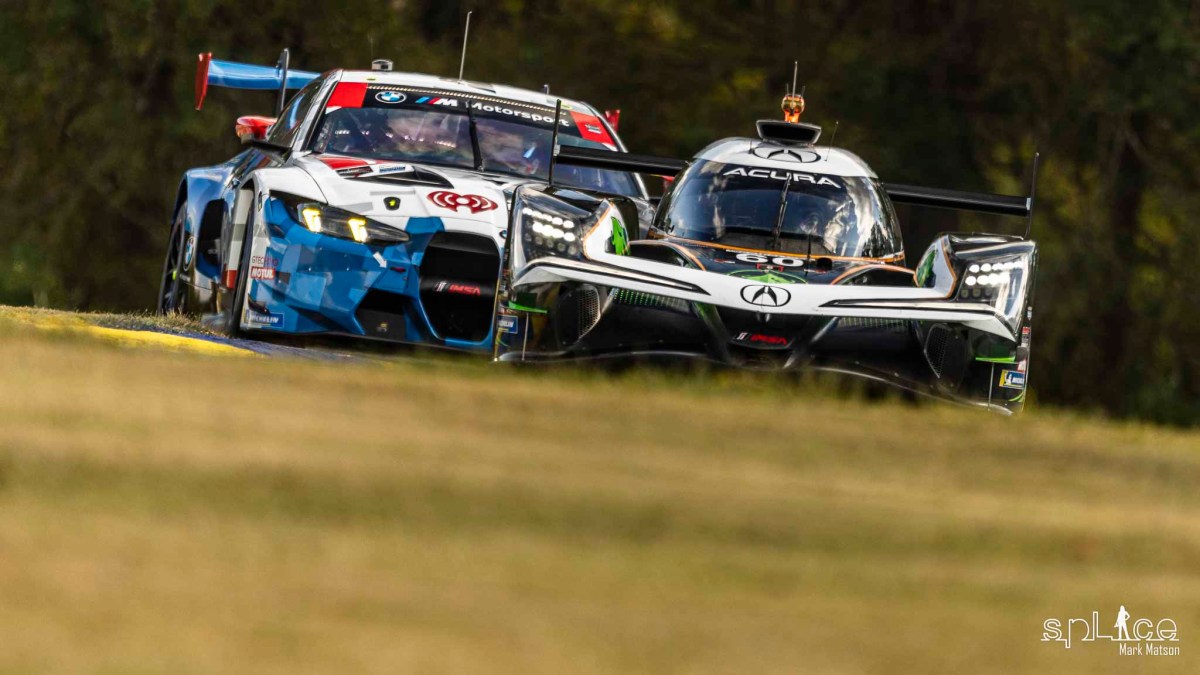
The GTD class was just as dramatic.
The No. 57 Winward Racing Mercedes-AMG GT3 entered Petit Le Mans with a narrow championship advantage and left with something much more valuable.
Russell Ward, Philip Ellis and Indy Dontje delivered Winward’s first Petit Le Mans victory and secured the team’s third consecutive GTD championship.
It was an extraordinary achievement.
Ward and Ellis had formed the core of Winward’s program, while Dontje joined for the endurance races. The team had battled through an inconsistent first half of the season before producing a remarkable late-season run.
The final five races told the story. Winward recorded four victories and a second-place finish at Indianapolis, transforming its championship fortunes.
At Road Atlanta, Ellis took control of the closing stages.
The No. 57 battled the No. 912 Manthey 1st Phorm Porsche and others for position before Ellis moved into the GTD lead on Lap 320.
Once there, Winward had the pace and discipline to stay in front.
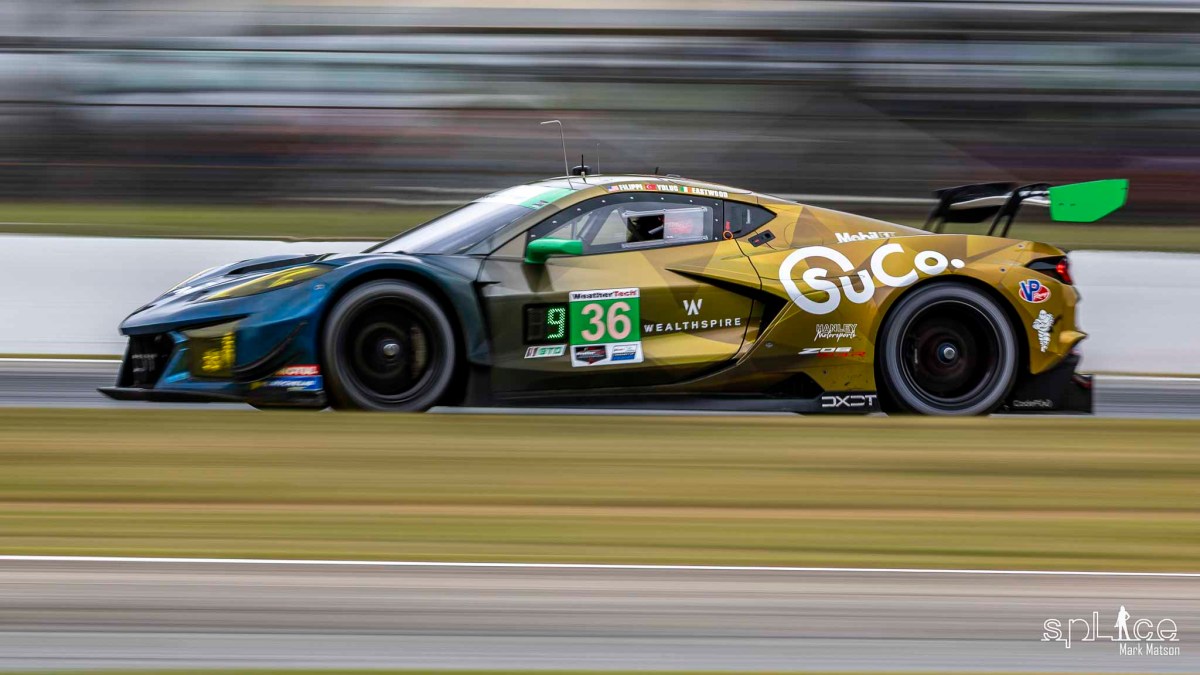
The No. 912 Porsche, shared by Ryan Hardwick, Riccardo Pera and Morris Schuring, finished second, while the No. 36 DXDT Racing Corvette of Charlie Eastwood, Salih Yoluc and Mason Filippi completed the GTD podium.
Winward’s third consecutive championship was arguably one of the defining accomplishments of the 2026 IMSA season.
By the time the final cars crossed the line, the numbers told the story of the race.
Three hundred sixty-eight laps.
Ten hours.
Sixteen full-course cautions.
A lightning stoppage.
Rain.
A violent Porsche accident.
Championships decided in the final stages.
And a winning margin of only 1.205 seconds.
Yet statistics alone cannot explain what made this Petit Le Mans so memorable.
The 2026 finale was a race in which patience mattered as much as aggression. Teams had to know when to attack and when to simply stay out of trouble. Drivers had to judge traffic while the track changed underneath them. Engineers had to make decisions without knowing what the weather would do ten minutes later. Crew members had to be ready for every restart and every unexpected pit stop.
For Porsche Penske Motorsport, all of those pieces finally came together.
The team had already won at Daytona and Sebring. Petit Le Mans had remained the missing piece.
Until Saturday night.
The No. 6 Porsche did not dominate the race from beginning to end. It did not have an easy path to victory. It was penalized early, shuffled backward by cautions and forced to fight through a race that seemed determined to change direction every few minutes.
But when the opportunity finally came, Vanthoor was ready.
Estre and Campbell had kept the car alive and competitive through the earlier stages. The Porsche crew executed when it mattered. And Vanthoor delivered the final stint that the team had needed.
The victory also carried an added layer of significance for Campbell.
After years of representing Porsche at the highest level, his final IMSA race for the manufacturer ended with the biggest trophy the program had been chasing at Road Atlanta.
For Estre, a driver who has spent years establishing himself as one of the world’s fastest sports car racers, it was the IMSA victory that had eluded him.
For Vanthoor, it was another chapter in an already decorated career, but this one required something beyond speed.
It required composure.

As the BMW closed during the final laps, there was no room for another mistake. No room for unnecessary risk. The rain had passed, the lightning had moved away and the chaos that had defined most of the afternoon and evening had finally given way to a simple question.
Could the Porsche make it to the checkered flag first?
It could.
Vanthoor brought the No. 6 Porsche 963 through the final corners and across the stripe, ending Porsche’s wait for a premier-class Petit Le Mans victory.
The celebration that followed was more than a season finale.
It was a payoff.
Road Atlanta had thrown almost everything it could at the field. Porsche Penske Motorsport survived it all.
And after ten hours of rain, lightning, yellow flags, crashes, championship pressure and relentless traffic, the No. 6 Porsche was finally the car left standing at the top.
Petit Le Mans had once again lived up to its reputation.
Only this time, Porsche got the last word.
IMSA:



Michelin Raceway Road Atlanta: